

When my baby was born, I didn’t think much about a Baby Carrier.
I thought, “Arre, we’ll just carry the baby in arms. That’s how our mothers did it.”
And yes, for the first few weeks, that works. But slowly real life starts again. Cooking. Doorbell ringing. Courier bhaiya. OPD visits. Quick auto ride to the clinic. Attending a family function where everyone wants to hold the baby but the baby only wants you.
That’s when you realise — you need your hands back.
But choosing the right carrier? That feels confusing.
Newborn Baby Carrier? Shoulder Baby Carrier? Detachable Hip Seat Baby Carrier? Ergonomic Baby Carrier? Toddler Baby Carrier?
Let’s sit calmly and go through it. Parent to parent. No pressure. Just practical understanding.
Why Baby’s Age Really Matters
A baby at 1 month and a baby at 1 year are completely different creatures.
Newborns are tiny, floppy, always curled.
Six-month-olds want to look around.
Toddlers? They want up, down, up, down… every 5 minutes.
So one type of carrier cannot suit every stage in the same way.
Also, in India we deal with:
- Heat and humidity
- Long summers
- Sweaty afternoons
- Sudden monsoon dampness
- Crowded markets
- Small lifts
- Busy OPDs
The right Comfortable Baby Carrier should support both baby and parent in this reality.
0–4 Months: The Newborn Stage
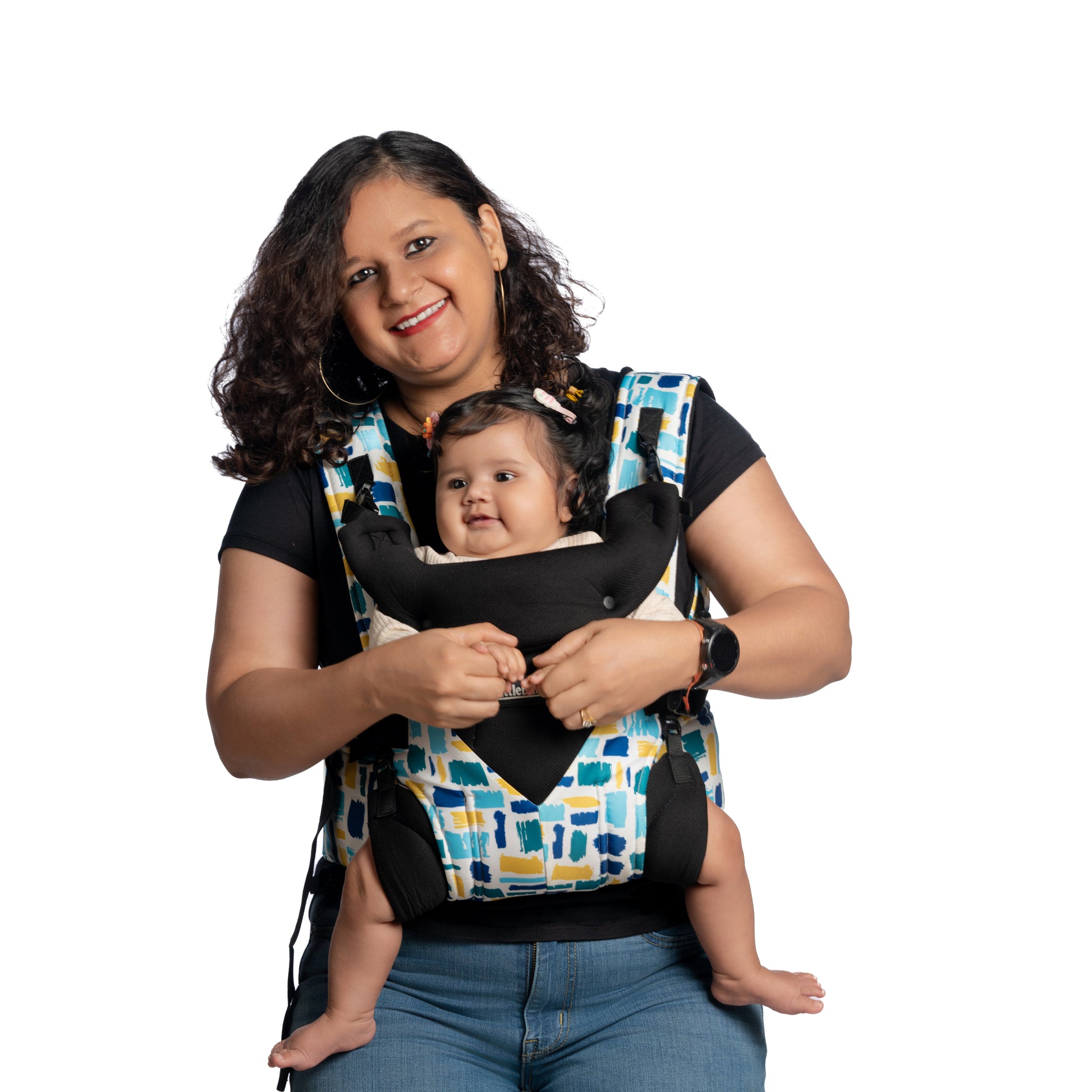
This stage is delicate.
Newborns need:
- Head and neck support
- Tight, close hold
- Soft fabric
- Inward-facing position only
At this age, the focus is not style. It’s safety and closeness.
A good Newborn Baby Carrier should:
- Hold baby high on your chest
- Keep chin off chest
- Support natural “M” leg position
- Feel snug but not tight
In Indian weather, fabric matters a lot. Breathable cotton or soft mesh helps reduce sweat buildup. Otherwise both of you will feel sticky within 10 minutes.
During summer, I preferred wearing light cotton clothes and using a light carrier. In monsoon, I made sure to dry it fully after use because damp fabric smells very quickly here.
At this stage, long outings are rare. Mostly:
- Clinic visits
- Small walks
- Quick temple visit
- Balcony walks in evening
So you don’t need heavy structure yet. Just comfort and support.
4–8 Months: Curious Baby Phase

Now baby starts observing the world.
Neck control improves. They want to look around. This is where many parents upgrade to an Ergonomic Baby Carrier.
Why ergonomic?
Because weight increases quickly.
If weight is not distributed properly:
- Shoulders start hurting
- Lower back pain begins
- You stop using the carrier
An ergonomic design spreads baby’s weight across:
- Both shoulders
- Upper back
- Waist belt (if available)
At this stage, handsfree movement becomes important.
A Handsfree Baby Carrier helps during:
- Stirring dal while baby watches
- Folding laundry
- Paying vegetable vendor
- Holding umbrella in monsoon
You are not free-free. But you are not stuck either.
Breathability becomes even more important now because babies sweat more.
8–18 Months: Active & Heavy Baby

This stage is different.
Baby wants:
- Up when scared
- Down when confident
- Up again when bored
Constant lifting strains your arms.
This is where many parents prefer a Detachable Hip Seat Baby Carrier.
The hip seat design supports baby’s weight from below instead of hanging from shoulders only. It reduces arm pressure when baby keeps getting on and off.
It feels natural — almost like carrying baby on your hip, but with support.
For heavier babies, a Toddler Baby Carrier with strong waist belt and padding helps balance weight better.
This stage is common for:
- Family weddings
- Travel in crowded trains
- Market visits
- Temple queues
You cannot keep lifting 10–12 kg repeatedly. Your back will complain.
Small Comparison: Traditional Carrying vs Ergonomic Carrier
| Aspect | Traditional Carrying | Ergonomic Baby Carrier |
|---|---|---|
| Comfort | Arm strain over time | Weight distributed evenly |
| Safety | Depends on hold | Structured head & hip support |
| Posture | Can be uneven | Supports natural M position |
| Long-term use | Tiring as baby grows | More practical till toddler stage |
Traditional carrying is beautiful. Skin-to-skin moments are priceless.
But for daily life? Structured support helps.
How Indian Parents Usually Choose
Let’s be honest.
We choose based on:
- Baby’s age
- Budget
- Weather
- Ease of washing
- Whether dadi approves 😄
But practically, check these:
1. Fabric
In Indian heat, breathable fabric matters. Cotton blends or mesh panels reduce sweating.
2. Support
Look for:
- Wide shoulder straps
- Padded waist belt
- Hip seat support for heavier babies
3. Age & Weight Range
Newborn support is different from toddler support. Always check weight capacity.
4. Ease of Cleaning
Spit-ups, biscuit crumbs, monsoon dampness — machine-washable material is helpful.
Two Options Many Parents Discuss
LittleBum Blue Ocean Detachable Hip Seat Baby Carrier

This type of carrier is useful when baby is heavier and active.
What I like about hip seat style:
- Baby’s weight rests on the seat, not just shoulders.
- Waist belt feels firm and supportive.
- Detachable design means you can use seat separately.
For daily life:
- Easier during grocery runs.
- Helpful when baby wants quick ups and downs.
- Feels more stable in crowded places.
Material matters here — breathable and padded support helps during long wear in summer.
Usually suitable from around 4–6 months onward (depending on baby’s development) up to toddler stage, as long as weight limit is within range.
LittleBum Handsfree Monochrome Shoulder Baby Carrier

A Shoulder Baby Carrier like this works well for lighter babies and shorter durations.
What stands out:
- Lightweight feel
- Easy to wear
- Simple structure
Good for:
- Quick errands
- Home use
- Soothing fussy baby
- Short auto rides
Since it’s handsfree, it gives you small freedom — holding phone, opening door, managing diaper bag.
Breathable material is important, especially in peak Indian summer.
Wearing Positions by Age
Newborn – Front inward only
6+ months – Front inward mostly
Older babies – Some carriers allow outward-facing briefly, but inward is safer for long durations
Hip seat – Side or front carry depending on comfort
Always check:
- Baby’s chin is not pressed down
- Face is visible
- Legs form M position
- Baby seems relaxed, not stiff
Summer & Monsoon Safety
Indian weather needs special attention.
Summer Tips:
- Dress baby in light cotton
- Avoid thick layers
- Check neck and back for sweat
- Take small breaks
Monsoon Tips:
- Dry carrier fully after washing
- Avoid damp storage
- Check buckles for rust or stiffness
Humidity can affect both fabric and hardware. Regular checking helps.
Washing & Care
- Use mild detergent
- Avoid harsh bleaching
- Air dry completely
- Store in dry place
Don’t ignore small tears in stitching. Repair early.
Common Mistakes We All Make
- Wearing baby too low
- Loose straps
- Ignoring weight limit
- Using toddler-style carrier for newborn
- Not adjusting waist belt properly
Small corrections make big difference.
2025–2026 Parenting Shift
More parents now look for:
- Breathable materials
- Long-term usability
- Ergonomic structure
- Carriers that grow with baby
Instead of buying multiple products, many prefer one well-designed Comfortable Baby Carrier that adapts from infancy to toddler stage.
It’s less about trend. More about practicality.
Final Thoughts (From One Parent to Another)
There is no perfect carrier.
There is only what works for:
- Your baby’s age
- Your body
- Your daily routine
- Indian weather
- Your comfort
Some days you’ll carry in arms.
Some days you’ll use a Shoulder Baby Carrier.
Some days the Detachable Hip Seat Baby Carrier will save your back.
Some days you’ll skip it completely.
That’s okay.
Parenting is not about buying the “best” thing.
It’s about finding what makes daily life a little easier — so you can hold your baby a little longer, without pain, without stress.
Choose slowly. Adjust patiently. Trust your instincts.
You’ll know when it feels right.
FAQs – Real Parent Questions
1. Can I use a Baby Carrier in peak Indian summer?
Yes, but choose breathable material. Keep outings short and check for sweating.
2. When can I start using a Newborn Baby Carrier?
Usually from birth if it supports head and neck properly.
3. How do I know if baby is comfortable?
Baby looks relaxed, legs supported, no excessive crying after wearing.
4. Is hip seat safe for small babies?
Better after baby has good neck control. Always check weight recommendations.
5. My back hurts. What should I check?
Adjust straps. Ensure waist belt is tight and weight is evenly distributed.
6. Can I cook while wearing baby?
Yes, but avoid open flames and hot oil splashes. Safety first.
7. Is outward-facing necessary?
Not really. Inward-facing is safer for longer durations.
8. How long can baby stay in carrier?
As long as baby is comfortable and you take small breaks.